

16 Apr 2025 Registered Nutritional Therapy Practitioners
BANT practitioner members are required to be registered either with Complementary and Natural Healthcare Council (CNHC) or be statutorily regulated. CNHC holds a register accredited by the Professional Standards Authority for Health and Social Care (PSA), an independent body accountable to the UK Parliament.
Only Registered Nutritional Therapy Practitioners and Registered Dietitians are trained and qualified in clinical practice to meet national standards and work in a one-to-one setting.
BANT Registered Nutritionists® have met training and qualification standards and work with groups, and the wider industry, academia and in non-clinical settings.
BANT members are required to meet Continuing Professional Development (CPD) standards.
Registered Nutritional Therapy Practitioners Offer Personalised, Evidence-Based Nutrition and Lifestyle Support
Registered Nutritional Therapy Practitioners assess and identify potential nutritional imbalances and understand how these may contribute to an individual’s symptoms and health concerns.
Practitioners consider each individual to be unique and recommend personalised nutrition and lifestyle programmes rather than a ‘one size fits all’ approach.
Personalised nutrition is tailored specifically for you, taking into account your health journey, your health goals and dietary preferences. The practitioner may use functional tests to inform the recommendations that are based on your unique biological individuality.
Personalised nutrition consultations are relevant for individuals with chronic conditions, such as diabetes, obesity, cardiovascular disease, and osteoporosis; anyone with persistent digestive issues or those wishing to support an autoimmune condition, as well as those looking to enhance their health and wellbeing.
BANT practitioners do not diagnose or treat disease, and recommendations are not a replacement for medical advice; practitioners frequently work alongside medical professionals to support individual’s wellbeing.
What a Nutritional Therapy Consultation Looks Like
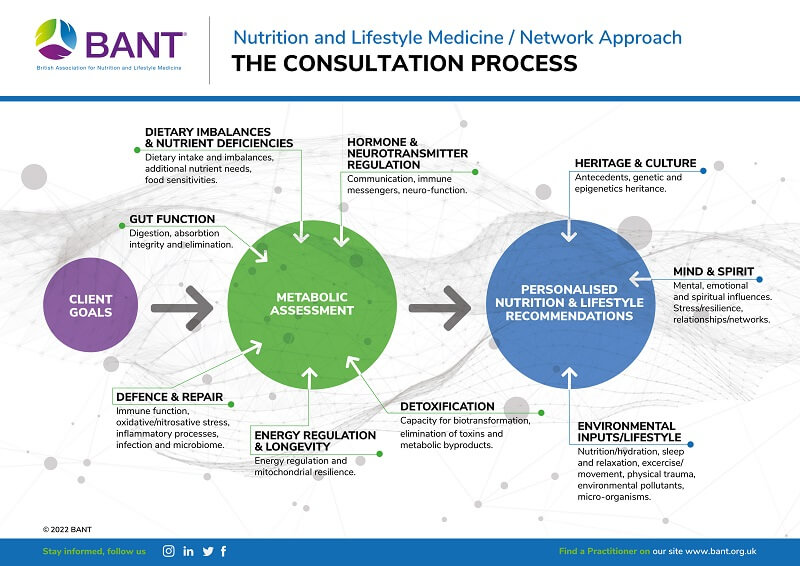
A consultation with a Registered Nutritional Therapist typically involves:
- Detailed case history – exploring symptoms, medical history, family history, diet, lifestyle, and environment
- Analysis of diet and nutrition status – sometimes supported by laboratory testing
- Individualised plan – including food, supplementation, lifestyle changes, and referrals if needed
- Follow-up support – adjusting the plan over time based on response and progress
This process helps the therapist and client build a picture of how different factors may be contributing to the client’s health status and how to support improvement in a structured, measurable way.
What Makes Registered Nutritional Therapy Practitioners Different?
The titles of “nutritionist” and “nutritional therapists” are not legally protected in the UK. Anyone can call themselves either, regardless of training.
Registered Nutritional Therapists are:
- Fully trained in the science of nutrition and lifestyle medicine
- Required to register with the Complementary and Natural Healthcare Council (CNHC), a PSA-accredited regulatory body
- Members of professional organisations like BANT (British Association for Nutrition and Lifestyle Medicine)
- Required to follow a strict code of ethics and maintain Continuing Professional Development (CPD)
This level of regulation ensures clients are receiving safe, evidence-based advice from a qualified professional.
Where Do Nutritional Therapists Work?
Many nutritional therapists work in private practice, offering in-person or online consultations. Others work in clinics alongside other health professionals, or in corporate wellbeing, education, or research.
Some areas where you might find nutritional therapists include:
- Functional medicine or integrative health clinics
- Workplace wellness programmes
- Specialist health retreats
- Community health initiatives
It’s important to remember that only those registered with CNHC are recognised to deliver one-to-one clinical care.
What Do Nutritional Therapists Help With?
You might be someone who gets bloated after every meal. Or someone who feels exhausted by mid-morning despite a full night’s sleep. Maybe your skin flares up regularly, or you’re dealing with unpredictable mood or energy changes.
These are just a few of the reasons people turn to nutritional therapists.
Common concerns supported by nutritional therapists include:
- Digestive issues (IBS, bloating, reflux)
- Fatigue or low energy
- Skin conditions
- Female hormonal health (PMS, perimenopause, PCOS)
- Stress and mental wellbeing
- Autoimmune conditions
- Healthy ageing and preventive healthcare
- Optimising athletic performance
You don’t need to be diagnosed with a condition to work with a nutritional therapist. Many clients seek support for prevention, performance, or simply to understand their bodies better.
Why People Seek Nutritional Therapy
Many people turn to nutritional therapists after trying multiple solutions—diets, supplements, or private testing—without clarity or consistent results. Others feel dismissed by standard medical care or overwhelmed by conflicting online advice.
Nutritional therapy offers a structured, evidence-informed approach to identifying patterns and making progress that lasts.
It’s ideal for anyone who:
- Has symptoms that don’t have a clear medical diagnosis
- Feels like they’ve tried everything but still don’t feel well
- Wants to optimise health before issues become problems
- Prefers natural, lifestyle-based strategies alongside medical care
How to Find a Qualified Nutritional Therapist
To ensure you’re working with a properly trained practitioner:
- Look for CNHC registration – this confirms they are qualified and regulated
- Check for BANT membership – this indicates high standards of ethics, education, and science-led practice
- Use BANT’s Find a Practitioner tool
- Visit the CNHC public register to verify credentials
Discover the Value of Working with a Registered Nutritional Therapist
Registered Nutritional Therapists play a vital role in bridging the gap between general wellness advice and personalised healthcare. They take time to understand how your diet, genetics, environment, and lifestyle interact and use that insight to guide tailored, evidence-based recommendations that help you feel better, for longer.
Generic nutrition tips and one-size-fits-all plans can fall short. Working with a Registered Nutritional Therapist puts your individual needs at the centre. For many clients, it’s the first time their symptoms, history, and goals have been fully explored and connected into a clear plan.
This approach supports symptom improvement while also helping you reconnect with your body, increase daily energy, and take charge of your long-term wellbeing.
If you’re ready to stop guessing and start understanding what your body really needs, a Registered Nutritional Therapist could make all the difference.
Find a qualified practitioner today through BANT or CNHC and take the first step toward clearer answers and personalised support.

